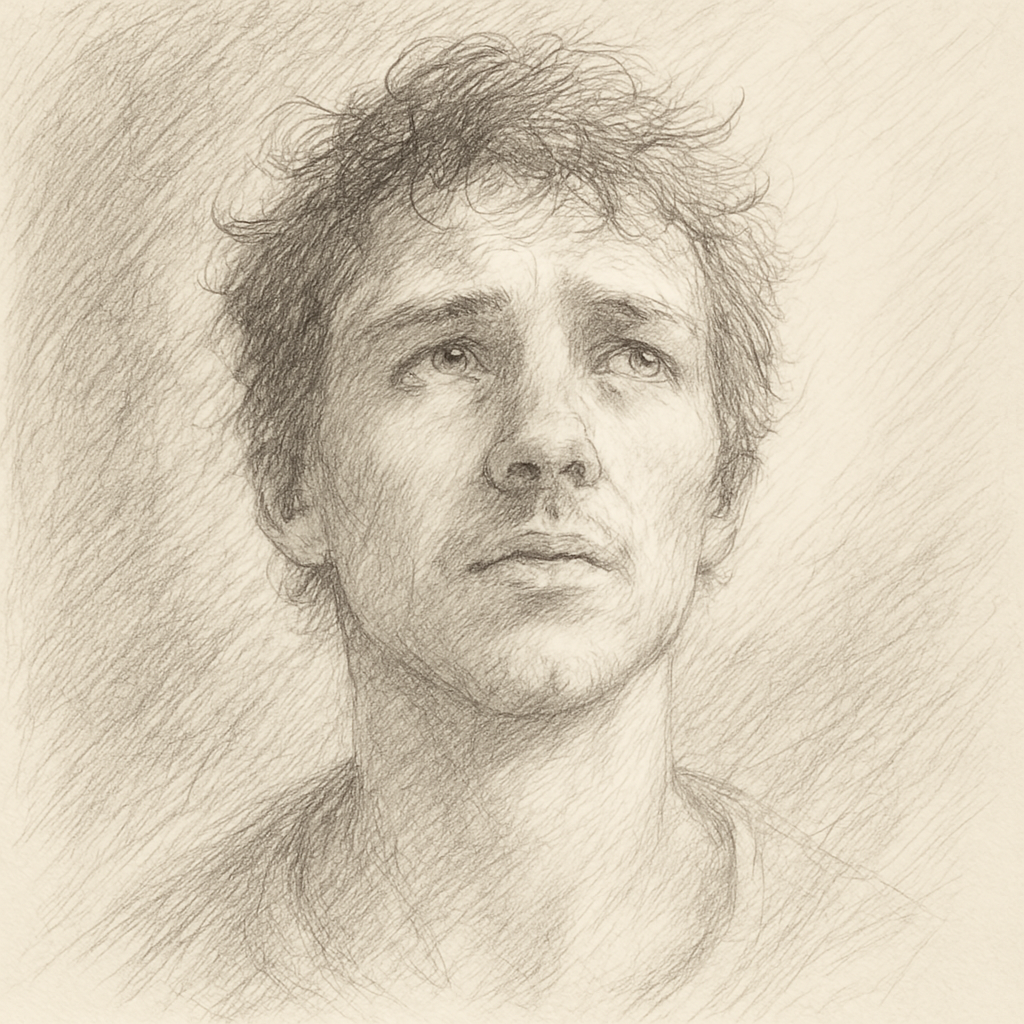

When you’re struggling, people assume you’re wrong. They might even tell you so.
“Look at your dating life—it’s terrible.” “How can you not believe in Joseph Smith?” “All you guys have thought about suicide—what a path away from God!”
I hear it from FLDS members, from people who only half-left, and from LDS folks too.
But here’s what I notice: only one of us is willing to consider the possibility we might be wrong. And for some reason, it’s always the one who’s struggling.
“We are all one. Only egos, beliefs, and fears separate us.” – Nikola Tesla
I’m Struggling Because…
I love truth. And when I saw my dad do it wrong—when I saw everything fall apart—
I said, I want pure truth. Not what I think is true. Not what my heart aches to be true because it’s familiar. None of that. I just want pure truth.
And I am willing to struggle, face darkness, face all of it—including all my family laughing at my struggle, my battle with darkness, my battle with God.
People who just turn to the familiar? They never had a mind open enough to dare question deeply.
Those people won’t struggle to rebuild a foundation. They will keep theirs. And it may do for the rest of their lives.
To me, that’s okay. But I want a foundation that is fundamentally true from my own experience—not the lie that was built under me, not something I cling to just because it’s familiar.
Think about this: In a June 2025 Pew Research Center study, 91% of adults aged 18–54 worldwide reported that they still identify with the religion—or nonreligion—in which they were raised.
My question to myself is this: If the spirituality of 91% of individuals remains the same, how is that not an example of familiarity bias?
One thing I have learned on this journey is this: truth is extremely painful, and if it doesn’t hurt, you probably can’t accept it.
The Risk and Reward of Building a New Foundation
Let everything you know go? That’s suicide territory. Most people can’t do it.
It’s easier to say, “We were wrong (although we couldn’t admit it until now), but I think these other guys—who are similar—are totally right!”
You won’t struggle with suicide that way. But you will always struggle deep in your soul with questions you never dared to answer truthfully. God and the universe will give you peace in those decisions, but they will also give you the reward of seeing and hearing only the truth you were willing to digest.
But for the person willing to ask the questions—willing to face every truth, no matter how bad it is—the reward is an understanding that people who cannot ask those questions will never have.
Think about this: It has always been those who questioned religion who made the biggest scientific discoveries. Why? Because you can’t truly ask questions if you don’t believe in the questions.
Giordano Bruno (1548–1600)—an Italian philosopher and former Dominican friar—publicly claimed that:
- The universe was infinite.
- Stars were just other suns, possibly with their own planets and life.
- Religious dogma was holding back human understanding.
This was centuries before telescopes could prove anything like it, and in a time when questioning the Church could literally cost you your life.
It’s Different Now…?
No. Scientists are not exactly atheists.
They are just willing to say, “I don’t know.”
And that is something most religious people cannot do without shattering their foundation.
All major scientific breakthroughs have come from asking fundamental questions—
from people who questioned religion, like Benjamin Franklin, to J. Robert Oppenheimer, who said:
“In the debate about God, I am not an atheist. I am not a theist. I am not anything.”
One thing you will find with all these people is that they almost always seek spiritual enlightenment, but almost invariably will not join a religious sect.
My question to you is this: If these great minds—who sought truth in physics down to understanding the atom—also sought enlightenment while disavowing religious dogma and sects, how do you know you wouldn’t come to the same conclusions if you dared to question? If you dared to ask?
Conclusion
No reward comes without a cost. And the cost of leaving your foundation is struggle—facing suicide in that struggle for meaning—and overcoming it.
Yes, it is easier to accept something similar and make all kinds of excuses. But for someone who loves truth, that will never do.
Most religious people will never understand that all religions offer a degree of the same thing they experience. Spiritual people often understand that religion holds one back from true spirituality—from pure truth without bias.
The wisest people in the world are not wise because they are better. They are wise because they dared to ask questions that would kill their own foundation.
And the more they asked, the more they understood they needed to go deeper—to ask more.
Truth doesn’t mind being questioned. Humans do.
But the real questions are the ones that make you hurt. Until then, you will have no problem “questioning everything.” But when it hurts your identity? That’s when it really counts.
I’m in it with you: Let’s ask questions that shake our ego and disintegrate our identity down to pure truth—truth that, in no situation, will mind being questioned.
You would also enjoy this article: Helping a Friend Leave a Cult: What Actually Works
Leave a Reply
You must be logged in to post a comment.